
Summer School
Home / Short Courses / Summer School
UWC ISAK Japan’s Summer School is an exciting opportunity for middle school students to live and learn together on our beautiful campus in Karuizawa, Japan. Get a taste of life at UWC ISAK Japan!
Summer School brings together bright, curious, motivated young people (ages 13-14) from a diverse range of countries, cultures and socio-economic backgrounds for what many students say is a “life-changing experience.”
At a Glance
What You Will Learn
Summer School focuses on leadership, enabling students to become aware of themselves and others, to identify and solve problems individually and with a team. Summer School supports students to gain the inner strength and curiosity necessary to overcome various real-world challenges. Students become more globally-minded as they develop the skills and confidence needed to become change-makers who can make a positive impact for the greater good.
In addition, we hope to provide various opportunities for students to deepen their discovery of their interests and develop their passions through the various activities and workshops we offer throughout the program. Through this discovery, we hope students can realise their uniqueness and become positive change-makers for our world!
Inquiry & Awareness
Students practice discovering and bringing attention to what is important for themselves and others, as a fundamental basis of leadership. They experience more about themselves and connecting with others.
Action & Empowerment
Students practice taking action based on their understanding of what is important for themselves and others. This happens both independently and collaboratively. They experience accomplishments—large and small—and feel empowered to do more and do it meaningfully.
Empathy & Diversity
Students practice approaching others with empathy, seeking understanding in their environment and with community members. They experience a diverse environment where they learn to acknowledge and understand different values and opinions.
Creativity & Growth
Students practice applying problem solving and leadership principles to create change in themselves and their communities, based on what is important and needed. They experience facing real challenges and solving real problems, bringing tangible growth for themselves and others.
Going the extra mile
Karuizawa is renowned for its year-round beauty, but summer is perhaps its best season. Hikes to nearby mountainsides and waterfalls are part of the Summer School routine, where we reinforce and encourage each student’s spirit of curiosity, discovery, teamwork, and appreciation for the environment.
Program Outline
Residential Experience
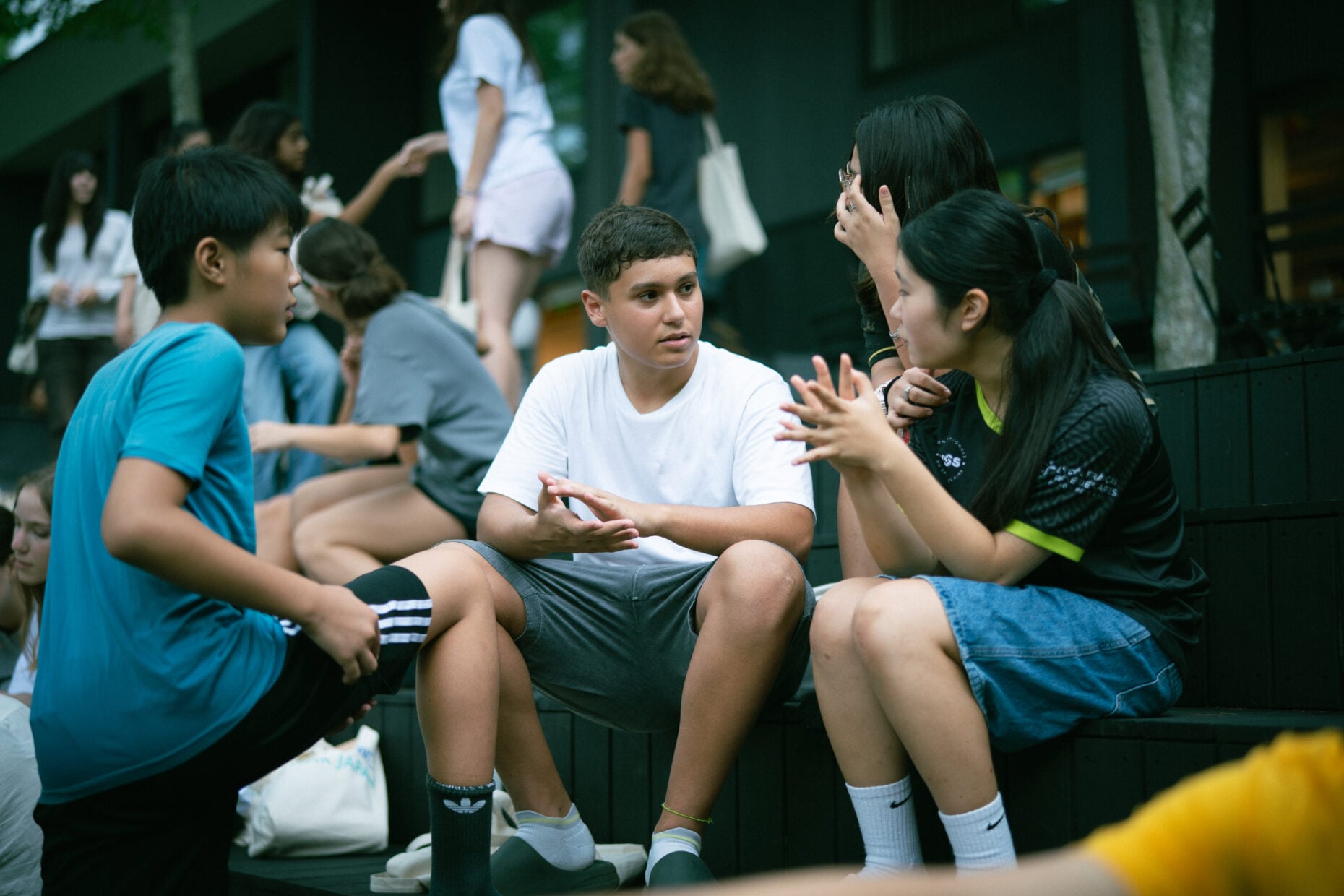
Summer School students will live 14 days in the school dormitories. Residential life is at the core of the Summer School experience, since it challenges students to settle in a new environment away from home with new friends—a first time for some! Students eat all three meals at our delicious cafeteria, participate in cleaning activities, casual board games and musical sessions, and so much more. Students get to be at the centre of creating their community and forming life long friendships.
Summer School staff, including a full-time nurse, are always present to support students in their residential life to help them make the most of their time at UWC ISAK Japan, their home away from home. Every day students connect with their advisory groups, where they check in with two adults and their peers to discuss what they are learning and to learn more about each other. This practice helps them make meaning and navigate their journey at the summer school.
Leadership As a Practice
Leadership as a practice is the principal at the core of UWC ISAK Japan education. We hope our students will become transformational leaders who can make a positive change in the world. A transformational leader is someone who consistently identifies what is most important and what is needed, takes action in the face of discomfort, uses diversity as a strength, and supports others in this practice.
At Summer School, our goal is to introduce our leadership model to students and give them as many opportunities as possible to put it into practice. Workshops, events, activities and residential life enable them to experience and challenge their leadership skills first-hand. Our workshops are all carefully designed to show how leadership can show up in different forms.
Workshops, Events, Advisory, and more
Providing the opportunity for students to develop their knowledge and skills, and discover their interest or passions is a key element of the program.
The classroom at Summer School takes many forms. Sometimes it is indoors around tables; sometimes it is outdoors on the grass or in the forest. At Summer School, we take advantage of our facilities and the beautiful environment surrounding campus. This goes beyond the classes and applies to our many nature hikes, events, talent shows, and extracurricular activities led by our talented team!
Summer School 2025 Courses
Students explored the joy of self and collective expression! In this course, students approached performance from all different angles to discover what they brought to the stage, and what the stage brought to them. From public speaking, television dramas, bass-thumping concerts, and the celebrations and rituals of our own vibrant cultures, we inquire: what modes of performance help shape our everyday lives? How can we use these tools to inspire a new future? Students honed performative skills in movement, voice, and storytelling with playfulness and critical thinking to investigate their use in a variety of contexts.
Inspired by the ideas of David Graeber, this course was all about doing things differently—because changing the world doesn’t always mean shouting the loudest or moving the fastest. Sometimes, it’s about slow, thoughtful actions that actually listen to people and build something real. Together, they explored how small, deliberate acts can ripple out into big, transformative change. Through hands-on activities, lively discussions, and real-world case studies, students learnt how to identify what their community truly needs, build solidarity, and take action in ways that are both effective and deeply human.
By the end, they walked away with practical tools, a clearer sense of how to make a difference, and the conviction that another world isn’t just possible—it’s already being built, one thoughtful action at a time.
In this class concepts like design thinking , circularity , and social (in)equality were explored. The goal of the class was to learn how to use circular design as a tool to come up with solutions to problems stemming from existing disparities in wealth and environmental degradation. We talked (and play a game) about natural resources, inequality, recycling and reusing as part of the process. For the project component, our goal was be to apply design thinking and circularity in coming up with a solution that will have a positive social impact in the community.
Students stepped into nature, got creative, and transformed the landscape! In this hands-on Land Art course, they explored how artists use the environment as their canvas— using the natural materials to create powerful installations. From designing small models to building large-scale artworks, students worked with their immediate environment to tell stories about Karuizawa, climate change and beyond. Connected with the land, experimented with textures and colours, shape and form, and discovered how art can spark conversations about nature and sustainability.
In this hands-on workshop, students explored how forests communicate in interconnected underground networks and through interspecies relationships. Using the UWC Karuizawa campus as our living laboratory, students engaged in nature-based observation, systems thinking, and hands-on prototyping. From forest walks, systems mapping to building their own bug hotel prototypes, students developed an appreciation for our natural world as living systems and apply ecological design principles to develop actionable solutions for a more sustainable future.
Testimonials
Students gave Summer School a 98.6% satisfaction rating in 2025.
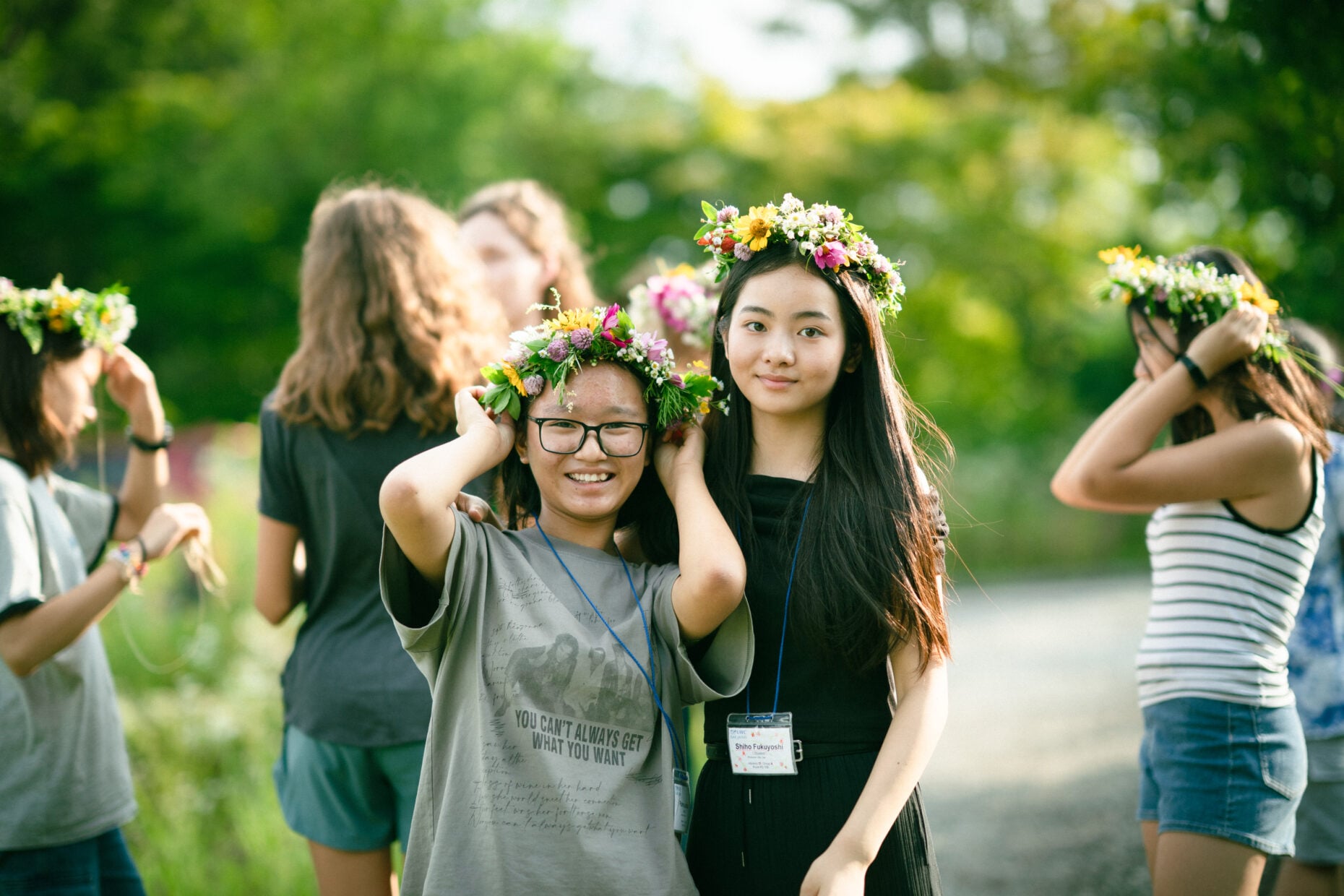
As it says on the summer school website, it is really a life changing experience, as you get to know people from all over the world and learn something that you can never study inside a classroom with a notebook and a pencil. Every single person that I met through summer school were people that I could never meet if I was spending my usual life, so it was a great opportunity to get to know them. I made new friends that I hope I could stay in touch with for the rest of my life.
Mizuki (Japan)
The most important thing I learned at summer school was to accept myself and embrace diversity. While summer school taught me many valuable lessons, the one that stood out most was how it brings together people from so many different backgrounds and helps us grow together. I also learned the importance of mindful leadership by design and circular design, which deeply shaped the way I think about collaboration and problem-solving.
Alisha (Pakistan)
When we picked up our son, his eyes sparkled with excitement, and he couldn't stop sharing everything he had learned, enjoyed, and cherished over the past 12 days. For him, ISAK Summer School was truly extraordinary, inspirational, and exciting. The innovative teaching approach at ISAK encouraged him to think creatively and outside the box. We are deeply grateful for how the program has challenged and inspired him.
PARENT
My child had an amazing experience. She came back happy, full of knowledge, strong friendships, and wonderful memories. It’s something she would gladly do again. What more could a parent want! The program was ideal, providing students with what it promised: strengthening their abilities, knowledge, and skills in an environment that gave them the opportunity to experience both the local culture and many other cultures.
PARENT
The most important thing I learned at Summer School is that it's okay to agree to disagree. Meeting all kinds of people from around the globe is great, and provides important perspectives to various issues, but sometimes your basic opinions will differ and that's inevitable. To still effectively work together, sometimes you need to accept that your views are different, and try to find a compromise. This realization was important for me, and Summer School has made me excited to work with a diverse group of people in the future.
TAKA (USA)
I have learned about a different way of viewing leadership. Before, I saw it as being a leader but now with my new knowledge, I know that having leadership does not mean being a leader but rather taking action and doing what is best.
OTTO (Canada)
As a parent, I am incredibly pleased with the UWC ISAK Summer School experience. It provided my child with a unique opportunity to learn, grow, and connect with peers from around the world. The program was well-structured, with a balance of academic challenges, personal development, and cultural exchange.
PARENT
Program Details
While attending Summer School is not a prerequisite for applying to UWC ISAK Japan for Grade 10, many students find Summer School an excellent opportunity to experience our school culture.
Program Dates
Tuition
Location
Instruction Language
Who Can Apply
Application Period
Age Eligibility
Requirements to Apply
How to Apply
Step 1
Check
Check your eligibility: You are born between July 19th, 2011 and July 18th, 2013 (13 or 14 years old during Summer School)
This birthdate range is flexible. If your birthdate is close to the eligible range, we encourage you to apply for Summer School 2026.
Step 3
Eligibility
After you register and your eligibility is approved, you will receive an email with a link to the full application form.
Step 4
Submit
Submit your application as soon as possible and before the deadline of March 2nd, 2026.
Step 5
Results
Results will be available by March 26th, 2026 11:59 PM JST.
FAQ
How do I determine if I am eligible for Summer School?
You are 13 or 14 years old during Summer School (born between July 19th, 2011 and July 18th, 2013).
Is the Summer School application only available in English?
Yes, applications for Summer School must be completed in English.
What is the application deadline?
March 2nd, 2026
I have attended Winter School, can I still apply to Summer School?
Yes, if you went to Winter School you can still apply for Summer School. Summer School will build upon Winter School. Make sure you tell us why you think you should experience Summer School as well in your application.
I attended Summer School last year, can I still apply to Summer School this year?
Yes, you can apply. However, please note that we give priority to new students in our selection process as we would like to give as many students the opportunity to experience UWC ISAK.
I have applied for G10 starting in September 2026, can I apply to Summer School?
No you can not apply to Summer School if you have applied for G10 this year. Please do not start a second application.
What level of English is required to participate in the program?
The program is delivered in English. The applicant should have the potential to contribute to the program in English, even if his or her English capabilities are slightly limited compared to other participants. A conversational level of English is fine.
How will my application be assessed?
Your application will be assessed based on a few short essays and a 2-3 minute video that you will submit in your application form.
Will an equal number of applicants be accepted for each grade?
We have not set a specific number of students to be accepted for each grade level. However, in order to diversify the ages of students, we will try to achieve a balance between multiple aspects of diversity, including age, nationality, gender identity and personalities.
Is there a limit to the number of students who are accepted from a specific nationality?
There is no limit for the number of students accepted from a specific nationality. The program will accept students based on their individual qualities, as well as the overall diversity of the student body.
Are there interviews?
No. There are no interviews but you will submit a 3-minute video introducing yourself. Make the most out of it!
Will there be a waitlist?
Yes. Strong applications might be added to the waitlist. This means that you will have the chance to attend Summer School if a place opens up.
Is there any financial aid available?
Yes! Please submit a financial assistance form with the Summer School application. We may request an interview with the applicant and guardians in order to proceed with the application. Financial assistance will be determined based on financial need. We will provide full and partial scholarships based on proven need.
My child is participating in extracurricular activities at school, which includes practice during summer vacation. Is it possible to join the Summer School for only part of the program?
No, all students accepted are expected to participate in the whole Summer School. Unfortunately, we will not be able to accept participants who can only attend part of the program.
Is it possible to visit while Summer School is in session?
We will hold a virtual parent session, which will allow you to get a glimpse of the experience your child is having. If you are in Japan, you will have the opportunity to drop off or pick up your child from campus. However you will not be able to enter the school buildings, but are able to drive around campus.
How do participants get to and from Summer School?
Transportation to and from Karuizawa is not included in the program. Therefore, we are unable to assist with international travel arrangements unless we have explicitly informed you that we will handle the arrangements. If you are able to come to Japan on your own and meet us at the set date and time, you are welcome to apply.
Karuizawa is on a major transportation route, so travel to and from Karuizawa station is relatively simple. We will assist students in getting from Karuizawa station to and from campus. We will most likely also arrange for a bus leaving from Tokyo Narita airport and Tokyo Central Station area. This will be bookable closer to date and based on the needs from all participants.
How will class composition be determined?
We will try to achieve a balance among nationalities, genders and personalities when dividing students into classes.
Will there be an equal number of male and female students?
We try to attain an equal number of male and female participants, although the ratio changes slightly from year to year.
Please explain more about the dormitory facilities at UWC ISAK.
UWC ISAK’s residential buildings are constructed as townhouses, which means that there is a row of attached units, each with its own door to the outside. Each building has a mix of units for faculty and students (faculty lives in private units adjacent to the student units, and with internal access to the student units). The student units are single sex (male and female students live separately), and each unit houses approximately twelve students, with two or four students sharing each bedroom. A living room/seminar area provides communal space for students to study and relax together outside of class hours. During the Summer School, counselors also live in the same units with students in the dormitories.
How are roommates assigned? What are the housing options? Are ‘single’ rooms available for students?
All students will live in single-sex apartments. Students will be mixed by age, grade and nationality. We seek to encourage cross-cultural understanding through interaction, and thus students will not be permitted to have single rooms, and many students will have up to three roommates.
Can you describe the food plan at UWC ISAK and the costs involved? Will students be able to get vegetarian or special meals?
Students will eat meals in a communal cafeteria located in the main school building. The cost of meals is included in UWC ISAK’s program fee. Meals will be provided three times a day, seven days per week including snacks in the afternoon. UWC ISAK’s cafeteria will be run by a catering company that takes pride in providing tasty, nutritious meals, which has extensive experience providing food to international schools in Japan with a wide variety of student dietary needs. We plan to offer alternative menu selections for vegetarians or students who have dietary restrictions due to medical or religious reasons.
What will happen in the case of an illness or injury?
Karuizawa Hospital is located just 10 minutes from the campus by car. In the case of an injury or if a student feels ill, there will be staff available to take the student to the hospital. Saku Central Hospital is also 30 minutes away from the campus. During Summer School there is also a nurse on campus and on duty during the day hours (08:30 – 18:30)
Can participants use a cell phone during the program?
No. In order for students to fully focus on the program and have interaction with students from UWC ISAK Japan, we will keep your cell phone and other electronic devices until you leave.
Do we have to bring our own computer or iPad?
No. We do not ask students to bring their own computer or iPad. We will have devices available for students so that they can contact their family or friends during the program.
How much money should my child bring?
During the program we are not going to have any shopping outings or there is no opportunity to spend money on campus.
Do students need to bring extra spending money?
No. There is no need to bring spending money. All activities and outings are included in the program and there are no shopping excursions during summer school.
When is the deadline for tuition payment?
The deadline for tuition payment is April 11th, 2026.
Under what circumstances could Summer School be canceled?
Summer School could be canceled if: COVID-19 poses a significant threat; or, a natural disaster or other unforeseen event means it is unsafe to hold Summer School.
What happens if UWC ISAK Japan cancels Summer School?
If UWC ISAK Japan cancels Summer School, we will refund your tuition.
What happens if the student cancels their attendance?
A participant can cancel up to April 25th, 2026 and receive a refund. Cancellations made after April 25th, 2026 can not be refunded. Please send us an email to cancel.
Is there a plan for dealing with contagious diseases?
Yes. The procedures and plans for contagious diseases will be shared with participants when offers are sent out. We will do our utmost to minimize and manage the risks of illness that could spread and the effects it could pose to our Summer School community.
