Miki Kawamura graduated from UWC ISAK Japan in 2025. Since then, she has become the Director and Founder of the Youth Peace Ambassadors program, spoken at international forums, and is building a global movement uniting young people around a shared vision of peace.
The ISAK Spark: When conflict became catalyst
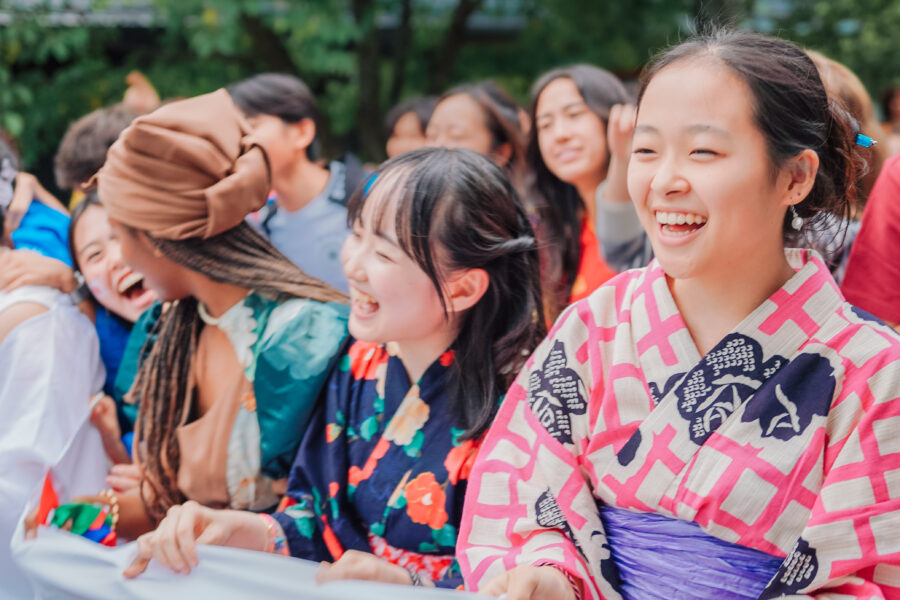
One of the most defining experiences that shaped my thinking about peace at ISAK was living in a boarding house with students from more than 90 countries.
At one point, two students from completely different political backgrounds clashed with each other. Watching their conflict unfold, filled with anger and frustration, made me genuinely sad. ISAK’s mission is “to be a catalyst for positive change,” yet even in such an innovative and diverse environment, disagreements and tensions still arise. It made me realize that no matter how good our intentions are, we can still hurt each other.
But then something unexpected happened.
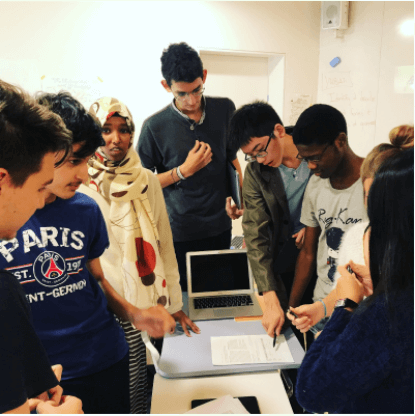
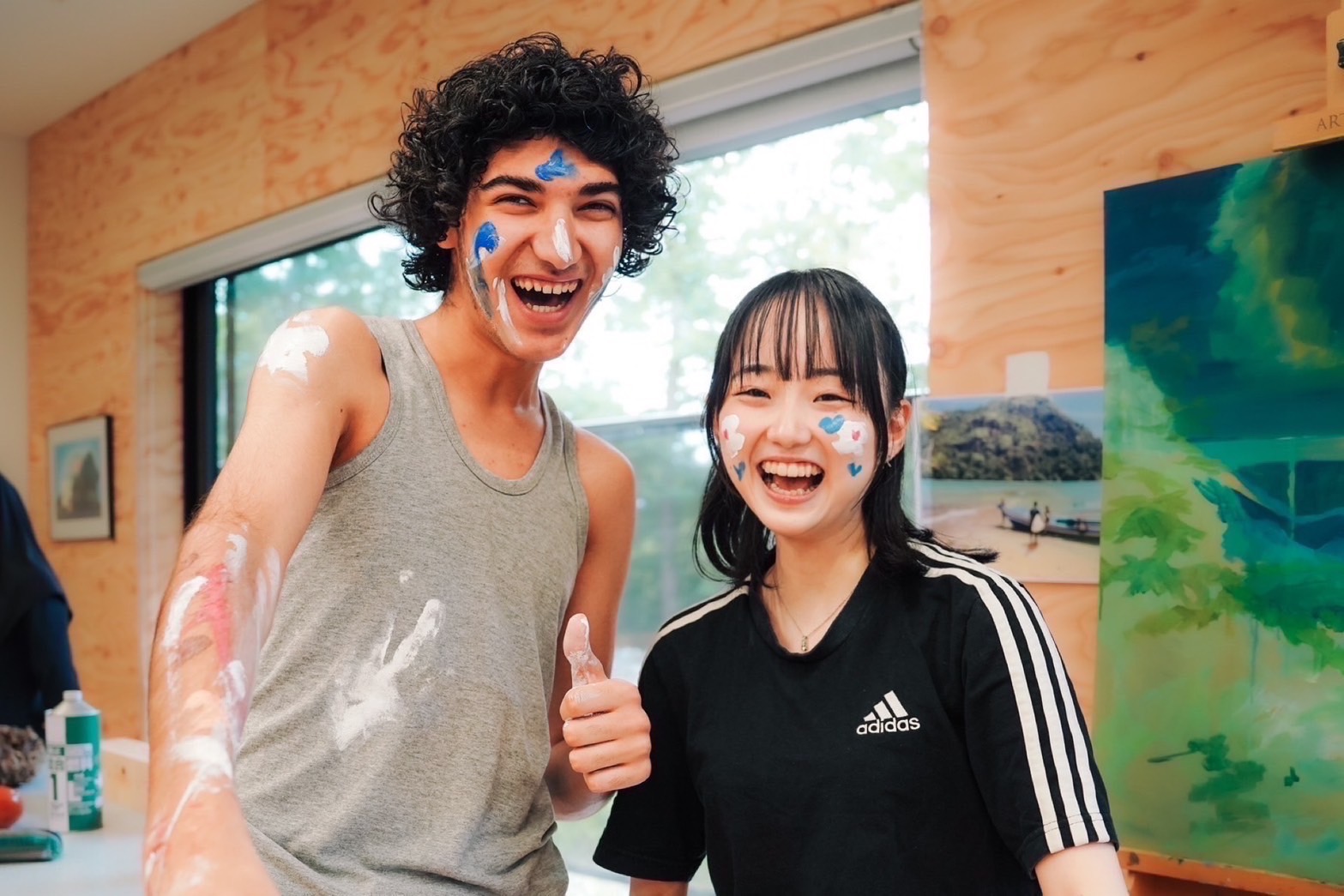
On the International Day of Peace, I organized an event where students worked on a peace project. Students wrote the word “peace” in their own languages, and together we built the peace project in front of Asama Lounge in ISAK. The art room was filled with positive energy, with students painting and even accidentally painting themselves. In that joyful, colorful atmosphere, I felt a collective spirit of peace.

After the event, I saw those same two students who had been in conflict sitting side by side, quietly looking at our project together.
In that moment, I realized that while our differences may sometimes divide us, a shared desire for peace has the power to bring us together beyond those differences. That moment moved me deeply.
Defining peace: beyond the absence of war
When I talk about peace, I think about both outer peace and inner peace. Outer peace means a physically safe world: no war, no violence, no harm. But inner peace is just as essential. I believe the world we perceive is a reflection of our internal state. If someone is filled with competition, hate, or anxiety, that is how they interpret the world. But if their heart is full of love and gratitude, the world appears peaceful and harmonious.
In Japan, we often assume we live in a peaceful society simply because there is no war. Yet the leading cause of death among young people is suicide. This cannot be called true peace. To me, this reflects a profound lack of inner peace.
A peaceful world begins inside each person. When I imagine a peaceful world, I picture a world where each person, deep in their heart, truly wishes for peace. Because if peace becomes our shared goal, then the way we speak, the way we treat others, our posture and attitudes, and even our conflicts all begin to move toward peace. Even when disagreements or arguments happen, they are not the destination. Peace is.
And when peace is the destination, a natural willingness to understand others appears. I believe this orientation, this way of being, is what truly builds peace.
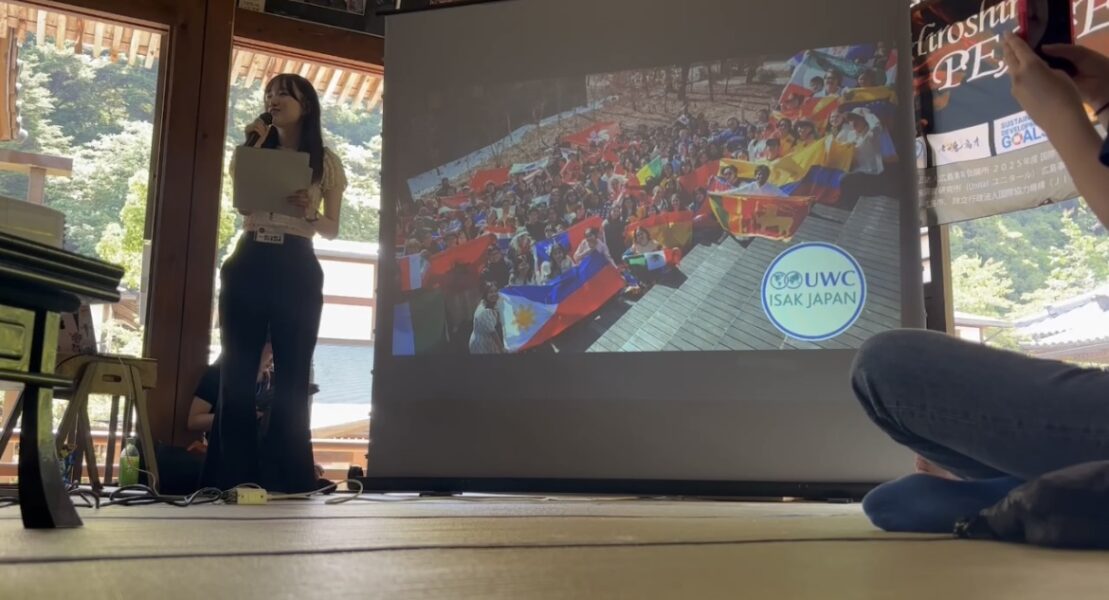
In my speeches, I often say: “I don’t want to be someone who simply talks about peace. I want to be someone who lives peace.” There are many people who talk about peace, but so few who embody it. To me, living peace means becoming the kind of person who makes others think: “If a peaceful world existed, the people living in it would look like this.”
Many peace initiatives attract people who are already interested in peace. But I want to reach the people who aren’t thinking about peace yet, offering them a gentle spark that invites them in. That is why I create diverse pathways into peace education.
From ISAK to the world stage
ISAK taught me that it is possible for people to unite despite their differences. In the dorms, students from 90 countries lived together, each of us different economically, politically, spiritually, and culturally. And naturally, conflict sometimes happened.
But ISAK also taught me something deeper: If conflict becomes the goal, there is no room for understanding. Relationships simply break apart. However, if peace becomes the goal, then conflict transforms into a pathway toward that peace. It becomes an opportunity for learning: learning about ourselves, about others, and about how to create harmony.
This shift in mindset is something I carry with me every day. Living in such a diverse community showed me that peace is not the absence of disagreement. Rather, peace is the presence of empathy, understanding, and a shared intention to move toward harmony. Even when we disagreed, the simple fact that we all wished for peace gave us something to return to, something that brought our hearts back together.
That lesson from ISAK has shaped every project I’ve created and every community I’ve worked with since. It taught me that peace is something we build through our everyday choices, our attitudes, and the spaces we create for others.
Making it happen: Youth Peace Ambassadors
The project I am currently leading is called Youth Peace Ambassadors. This initiative has two core pillars:
- Peace Voice: a global project where we ask young people, “What does peace mean to you?” and collect their messages through video.
- Peace Journey: a four-month online peace education program launching in February. Applications are now open, and the program will culminate in a Peace Pitch.
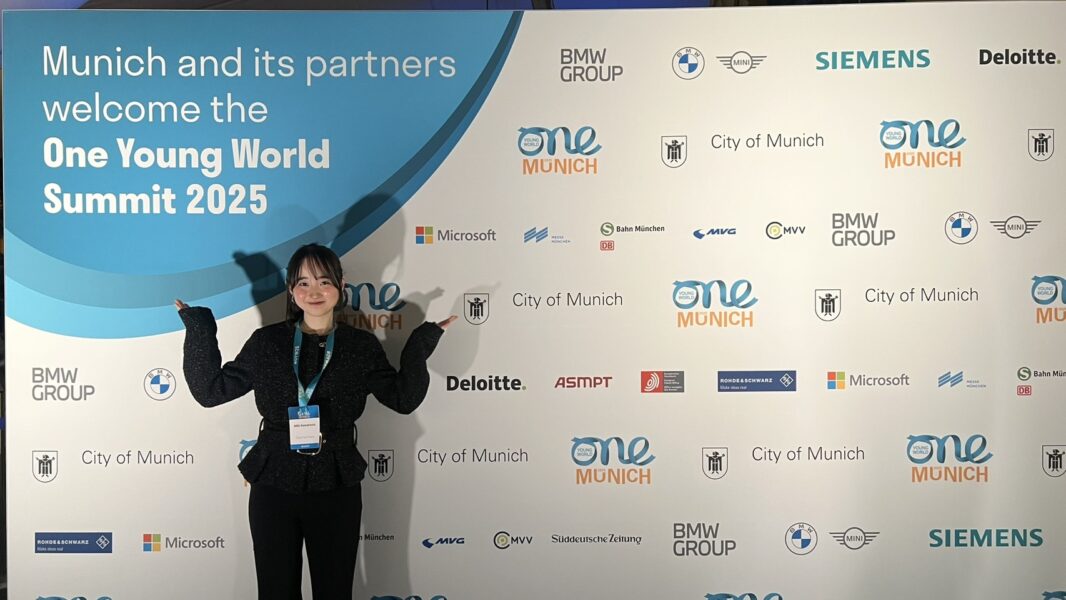
At One Young World, I expanded the Peace Voice initiative by interviewing participants and asking them the same question: “What does peace mean to you?” I turned these interviews into a video, which helped me build connections with youth communities across the world who expressed interest in joining our program.
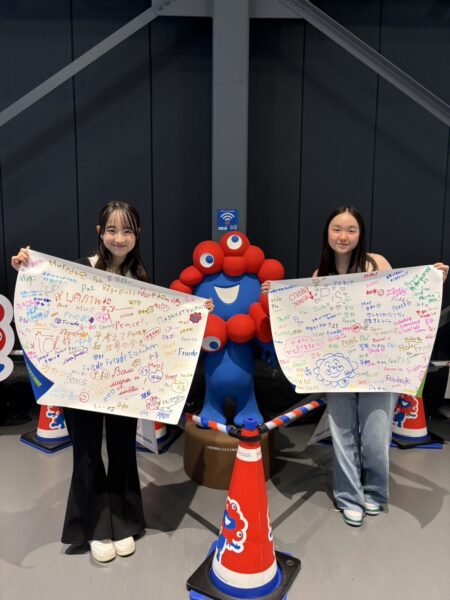
For the Peace Voice project, we showcased the video at Expo 2025 Osaka, inside MATSURI Arena, the largest arena in the expo site with a capacity of 16,000 people. The timeline was extremely tight. We launched the project in June and had only two weeks to collect global submissions. Despite this, we received 1,200 video messages from 70 countries in just 14 days.
Additionally, the Youth Peace Ambassadors program was featured in the Asahi Newspaper, reaching 3,569,000 people. Our Peace Voice video was broadcast on Unite 4 Peace TV, reaching an international audience of 72 million viewers. These numbers show that youth voices, when given a platform, can truly resonate on a global scale.
At the same time, I’m integrating youth networks from various global platforms, such as One Young World, Peace Pals, partner NGOs, and different youth communities I’ve met through my work. My goal is to merge these scattered networks so that young people can act collectively across borders. In short, I’m working to turn individual youth voices into a united global movement for peace.
To be honest, I didn’t experience these projects as “challenges.” Because peace work is my passion, every difficulty felt more like an opportunity to grow, create, and connect. If anything, I learned that when your work aligns with your passion, challenges transform into fuel, something that propels you forward rather than holding you back.
Yumi’s Universe: peace education through story
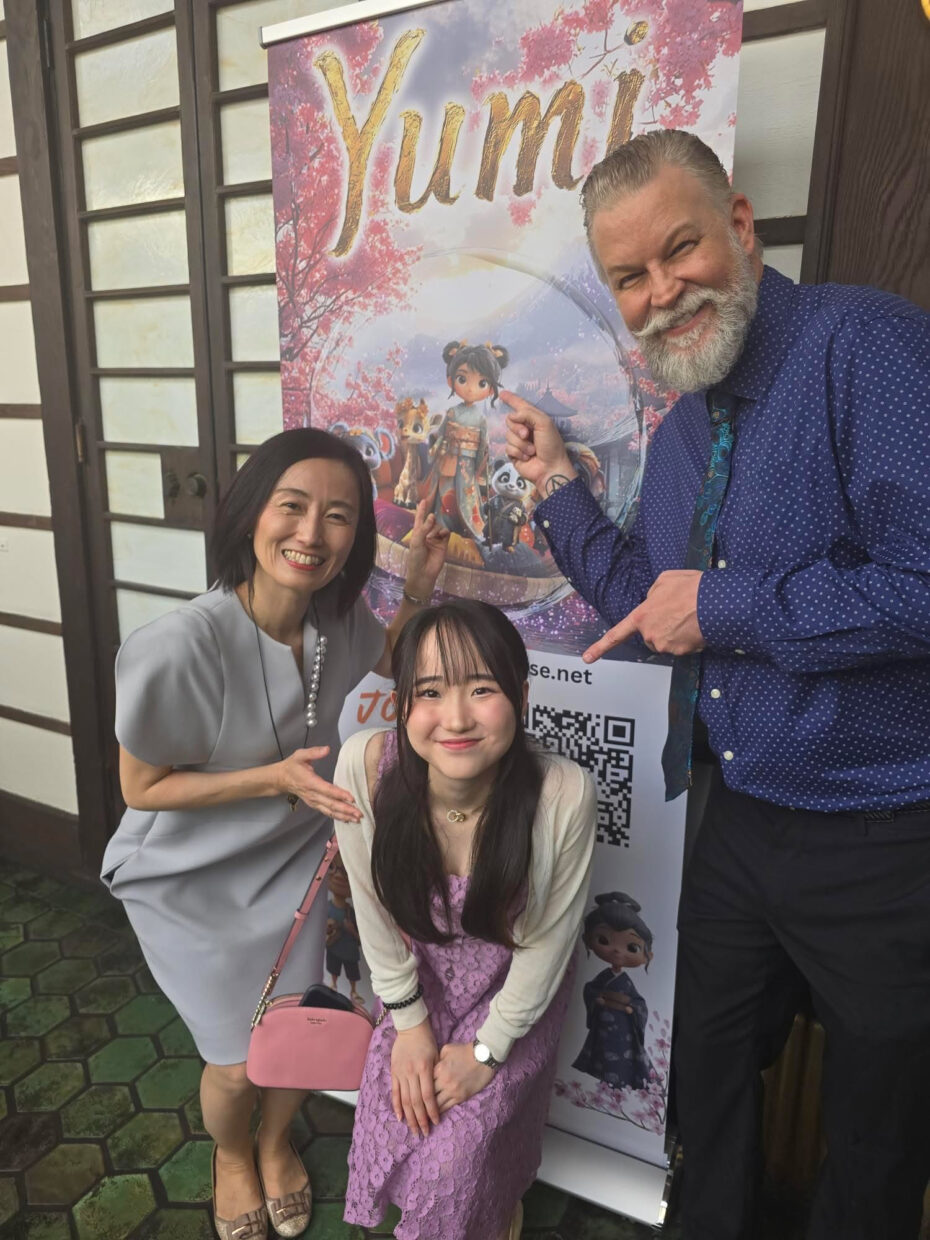
My second major project is Yumi’s Universe, a peace education project inspired by the wisdom of the Japanese tea ceremony. I had the honor of being the voice actor for the animation Yumi’s Universe! Through animations, music, stories, and global clubs, Yumi and her animal friends travel the world on a magical orb ship, teaching children about compassion, diversity, mindfulness, and unity.
Even though the project is still young, it has already achieved remarkable recognition: 6 international film awards and the 2025 International Impact Book Award. This project allows children to discover peace naturally, through imagination, stories, and emotional connection.
What’s Next: A Life Dedicated to Peace
One thing is already clear to me: I want to dedicate my life’s work to peace. That part is decided.
At the same time, I am a person who lives fully in the present moment. I follow what feels aligned, I respond to what the world asks of me, and I keep moving forward with the tasks and opportunities I’m given. This approach has guided me naturally into larger and larger circles of impact: workshops, speeches, international collaborations, and peace projects I never could have predicted a few years ago.
Next year, I will begin my studies at Minerva University. I don’t yet know what specific job or career title I will hold in the future, and I’m comfortable with that. What I do know is the direction: to create world peace.
Whether it becomes peace education, global leadership, consciousness research, or building youth movements, I trust that if I keep choosing what feels true, the exact path will unfold. My gap year has shown me that when your purpose is clear, your next steps reveal themselves.
In the long term, I want my work, whatever form it takes, to help people transform inwardly, connect outwardly, and co-create a more peaceful world.
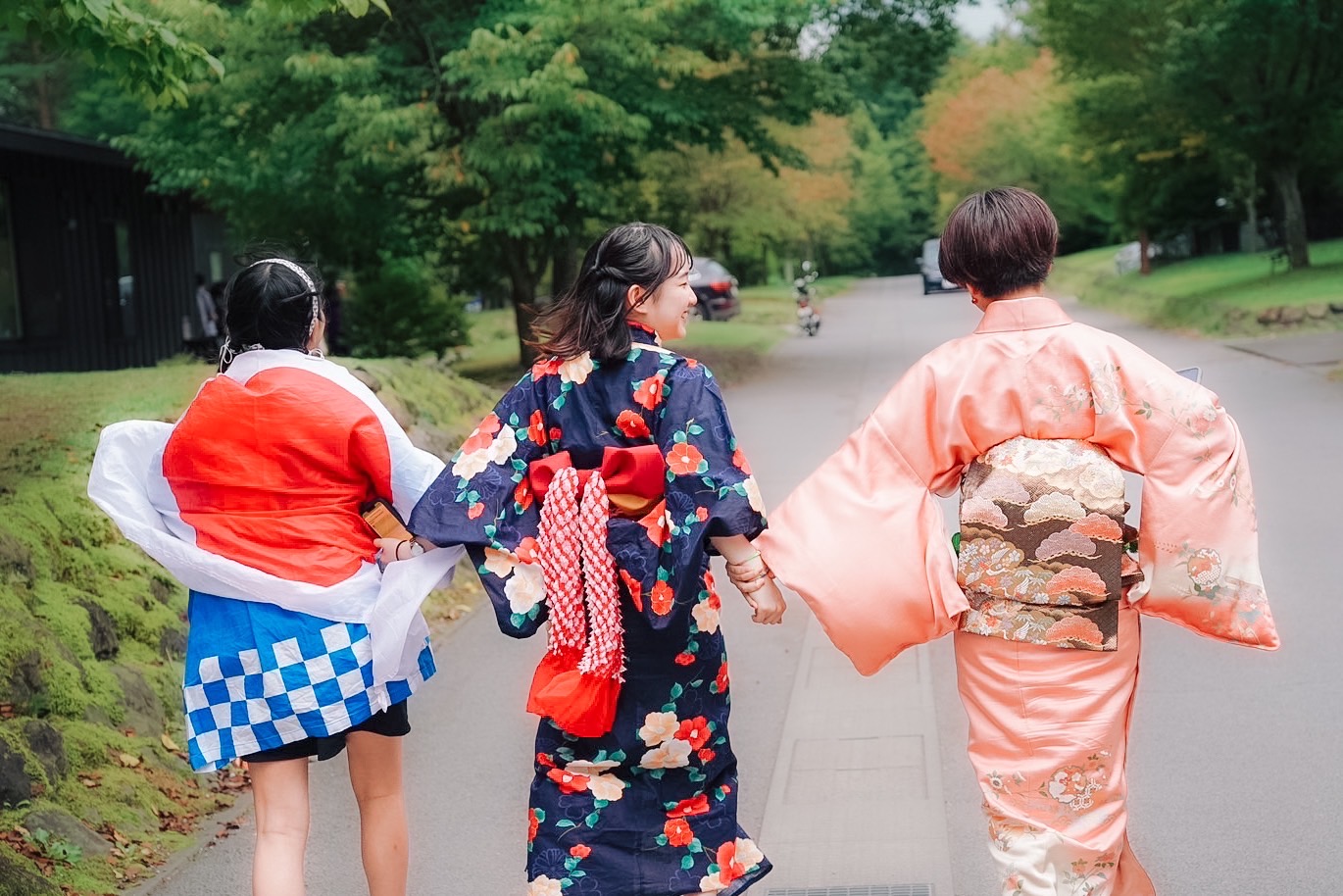
During her high school years, Miki created spaces for more than 10,000 people to reflect on peace through workshops, events, and public talks. As Miki continues building this movement, she carries with her the lesson that began in an ISAK boarding house: that a shared desire for peace has the power to bring us together beyond our differences.